Article
The 10 Minute Progressive Web App
There are many frameworks and services that promise to turn your site into a Progressive Web App (PWA) easily. In practice, it’s really quite simple to do yourself. This article will walk you through the process of setting up a PWA so you can see how easily it can be applied to any website. Google’s […]

Article
ARcostume: A Progressive Web App
ARcostume isn’t unique in placing AR widgets over your body. But it moves the starting point of Augmented Reality from an app, to something physical you wear. It’s something you can talk about immediately and show people with just one instruction: “Scan the QR code”.

Article
nod.js
Google’s Cardboard viewer standard has no standard control scheme. This is what led me to write nod.js, a simple gesture based event system for Google Cardboard enabled web apps. It uses device accelerometers to detect a sharp motion in one of four directions: up, down, left and right. With nod.js you can implement actions such as next, previous, confirm and cancel without the need for an external controller.

Article
Predator Vision
A recent project I worked on involved a thermal camera. At first it wasn’t clear whether or not we would be able to wire it into a web app. I decided to create a few alternative prototypes to fall back on, one of which involved motion detection. Anything moving is likely to produce heat. The effect works by capturing two frames, 3 seconds apart, from the live video feed. Even someone holding still to pose for the camera moves a little. Cheating, for sure, but the effect works really well.

Article
Browser Based Voice Recognition With Pocketsphinx.js
My latest GreenZeta Original, HeyHilri! The World’s First Politically Inspired Digital Assistant, explores Javascript based voice recognition in the browser. When I started this project my first inclination was to use a web service. Finding a reliable service, that was affordable, was harder than I expected. Some searching led me to the project Pocketsphinx.js. Pocketsphinx […]

Article
Making Skippy Art: HTML5 Peanut Butter Canvas
As part of the Skippy Yippee campaign I was tasked to create a web app which simulates drawing in peanut butter. In addition to a website, the campaign was set to have a duplicate experience inside of a banner ad as well as a mobile ad. HTML5 canvas was the clear choice as it was most […]

Article
Overcoming Phonegap Memory Limits With Local Storage
During development of Turkey Volume Guessing App, it began to crash at random on the iPad 2. Being a Phonegap app, it was the age old problem of memory limits in Mobile Safari. In this case the app is generating three large uncompressed png images which must be stored for use at different points in […]
Article
War of the Worlds Broadcast
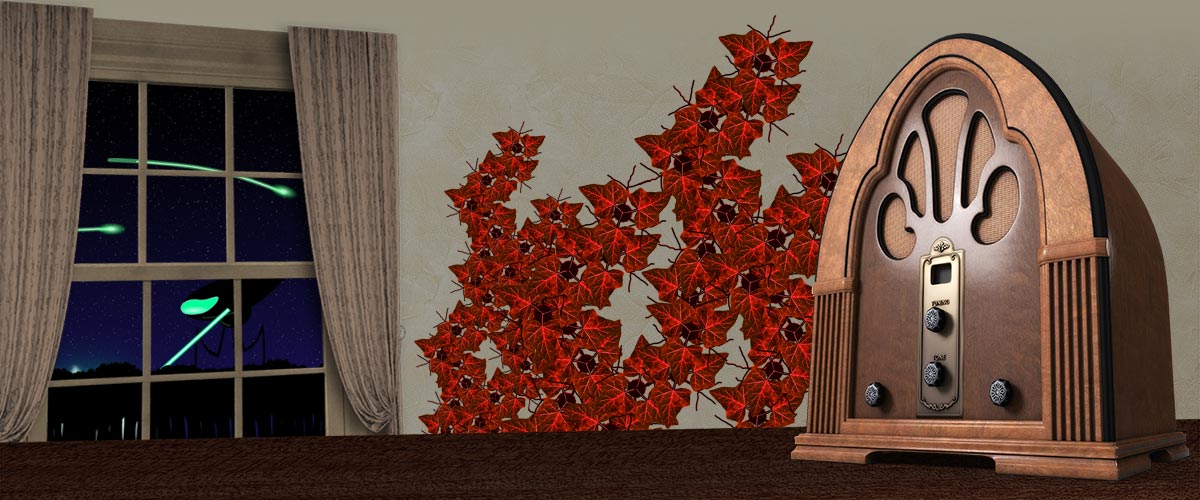
On the night of October 30th, 1938, Orson Welles and the Mercury Theater on the Air presented a dramatization of the HG Wells Classic “The War of the Worlds”. Their play took the form of a series of news bulletins portraying a realistic-sounding fictional Martian invasion. Those who tuned in late missed the introduction of […]
Article
The Prize Inside
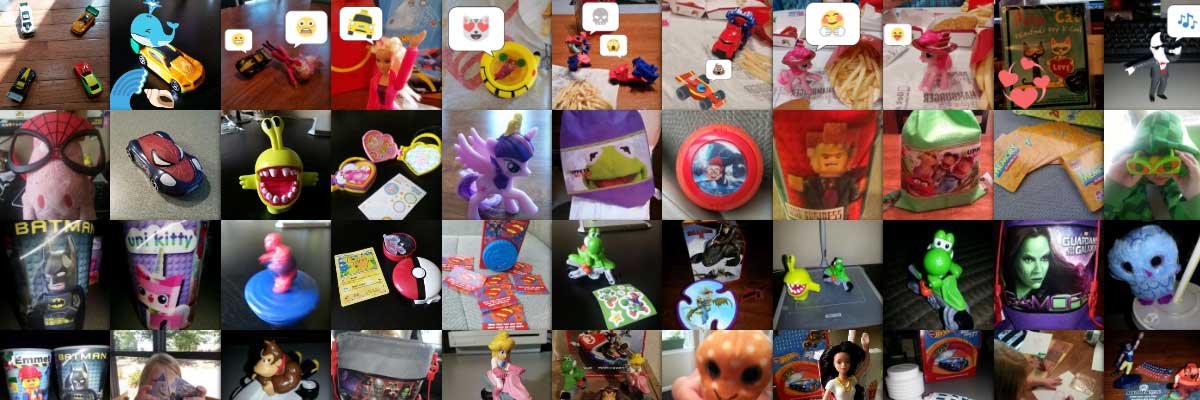
The idea was born out of my love of fast food, and my need to get out of the office every once in a while. I’d always pick my venue based on what toy I could bring home to the kids (or sometimes keep for myself). The food didn’t matter, a burger was a burger. […]

Article
Developing for the Windows App Store
It all started when some friends suggested I port JAWS Converter over to Windows 8. “Port the Jaws converter to a windows app and get free money. you should make that happen.“ A hundred bucks for an app that’s already done? Sounded like a good idea. I read that Windows 8 apps could be written in […]

Article
The Problem With Twitter Cards
I never paid much attention to Twitter Cards, the nicely formatted breakouts which accompany tweets. Most contain website details scraped from social sharing metadata. I recently found out that these cards have their own set of metadata that you can customize for Twitter. Twitter recently announced the release of a few new cards, including one […]

Article
Space Anglers: An Experiment in HTML5 Video Games
Join the Space Anglers tournament and compete for the highest score! Grab as many humans as you can before your energy runs out. Space Anglers is my first production in HTML5 <canvas>. It started out as an exploration of the various <canvas> libraries and eventually morphed into a full video game. The goal was to […]
Article
JAWS Converter apps released
JAWS Converter has just been released on the Google Play store and the Chrome Web store. Both are free, because sharks deserve to be free. Check out the links below and start measuring your world in terms of sharks! And for iPhone/iPad users, JAWS Converter has always been installable as a web app.
Article
Measure Your World In Terms Of Sharks
Using length of the shark from the movie “JAWS” as the base unit, everything in the universe can be measured in terms of JAWS. The JAWS system was first proposed by Writer/Director/Podcaster Kevin Smith of Smodcast.com as a superior method of visualizing distances: From Smodcast #206 (1:04:00) ‘A newlywed bride who saw her husband killed […]
Article
Facebook App Starter Kit – Now on GitHub
I recently moved my Facebook App Starter Kit (FASK) from Google Projects to GitHub. The move was mainly to play with GitHub but also to take advantage of their packaging and downloading features. FASK provides a ready made starting point for building facebook apps using the facebook javascript api. It’s built on the HTML5 Boilerplate […]
Article
Facebook App Center: An App Developer’s Perspective
There’s certainly no shortage of app stores out there. Now facebook is getting into the game with their new App Center. The facebook App center will provide the same kind of one stop shop experience you get from other app stores. However facebook is striving to set their store apart, with a more social approach […]
Article
The New iPad Hyperopia
According to an article from TechCrunch I read the other day, standard resolution graphics look like crap on The New iPad. This struck me as odd. Apple prides itself in visual presentation and an overwhelming number of apps would look terrible on the New Screen. I didn’t believe it at first, so when a friend […]
Article
How to Make a Custom Google+ Share Button
Every social network has a url which allows you to easily share your site. Facebook’s sharer.php and Twitter’s ?status= are the most common examples. Google plus has one as well: https://plus.google.com/share?url=https://mywebsiteurl.com Using that url you can easily make a quick share popup with just a few lines of javascript: function GPlusShare(pUrl){ // Set up the […]
Article
Facebook Timeline For Brands: An App Developer’s Perspective
Facebook apps certainly are popular among my clients. I’ve built over 40 of them in the past 18 months. So naturally when facebook overhauls their band pages, I’m interested in its impact on apps. Despite all the complaining, most of these changes are for the best. It appears as though facebook is gently forcing companies […]
Article
Paper.js
Paper.js aims to simplify the html5 <canvas> element, and does a really good job of it. The <canvas> element is arguably the most powerful new feature of html5, but it’s not without its problems. It lacks a straightforward drawing instruction set. Rather than laying out vector art in a simple notation, developers are forced to […]