A WordPress theme, command-line AI, and how one avoided task quietly reshaped my work
I was trying to talk myself out of redesigning my website again. It’s one of those things that I’m never happy with, and constantly tweaking. The idea of spending months buried in WordPress theme development again felt exhausting. But while experimenting with command-line AI tools, something unexpected happened. Tasks that once carried hours of invisible setup collapsed into minutes. The WordPress theme I’d postponed for years became the experiment that revealed a deeper shift: AI wasn’t just helping me work faster, it was changing my internal calculus about what was worth doing at all. This article is a reflection on that shift, and on how one “nice to have” project quietly reshaped my creative workflow.
Early Experiments With AI Coding Tools

Before the WordPress theme, my use of command-line AI tools was intentional and low stakes. I spent time with both Claude Code and OpenAI Codex mainly to understand their limits. It became clear quickly that both were extremely capable. Any differences between them mattered far less than I expected. What mattered was access and how naturally they fit into my workflow.
During a short Claude Code trial, I built a few small personal projects. These were complete web apps, but nothing flashy. They were exactly the kinds of things I usually would not bother building. Not because they were useless, but because they were never worth the time. What surprised me was how quickly they came together. Projects that would normally stretch across weeks of nights and weekends were done in days. That was the first sign something fundamental was changing.
Why Codex Became the Tool of Choice
Eventually, practicality won. I was already paying for ChatGPT, and Codex came with it. Claude Code got more attention, but Codex handled everything I needed just as well. Any preference I might have had disappeared once convenience entered the picture.
When OpenAI announced a temporary doubling of available tokens, it gave me the push I needed to try something bigger. Instead of another small experiment, I decided to tackle a project I had been avoiding for a long time. A full redesign of my main website.
The WordPress Theme
The WordPress theme was a future problem. My site worked, and I had redesigned it more times than I could count. The urge to redo it was always there, but the thought of spending two months buried in theme files felt draining. Still, with extra tokens and some curiosity, I decided to see how far Codex could take me.
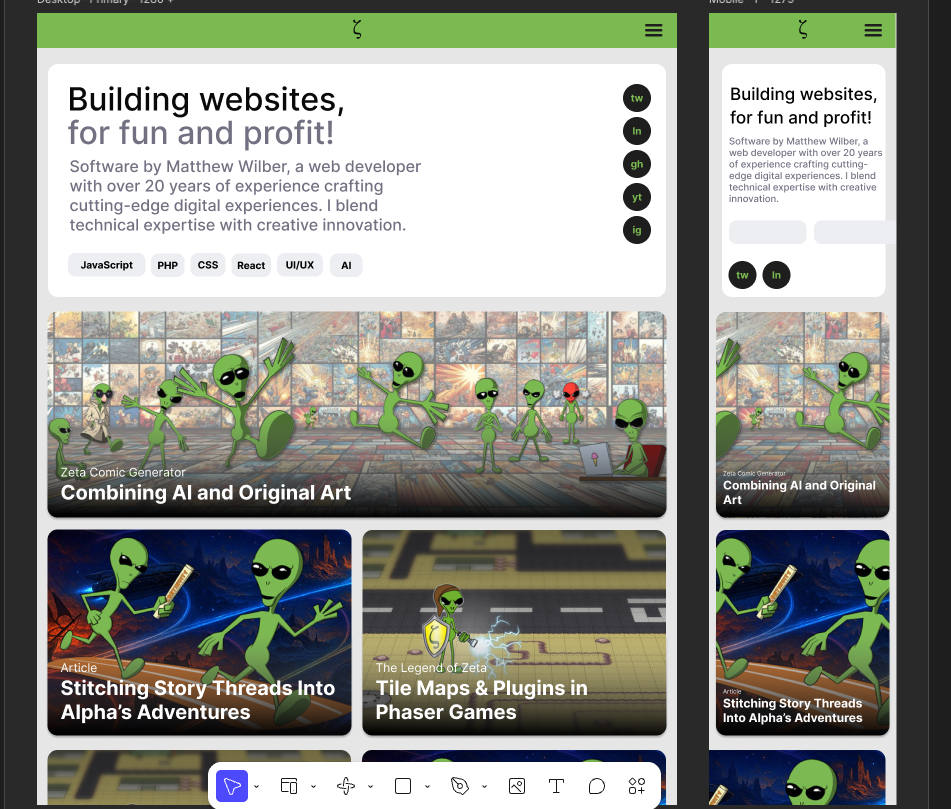
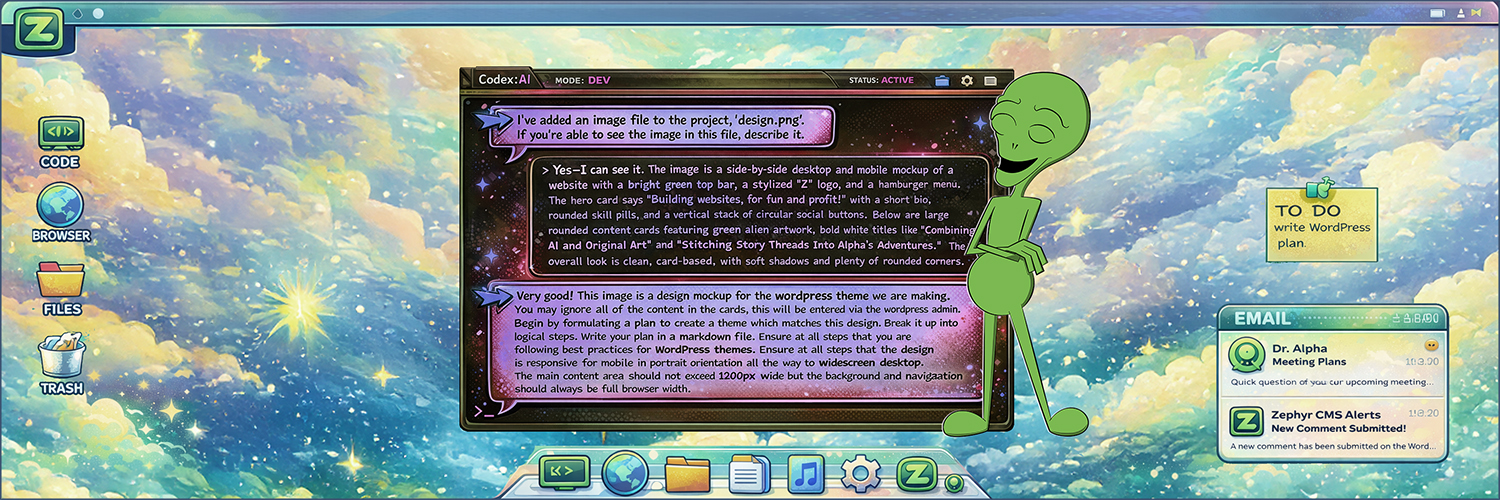
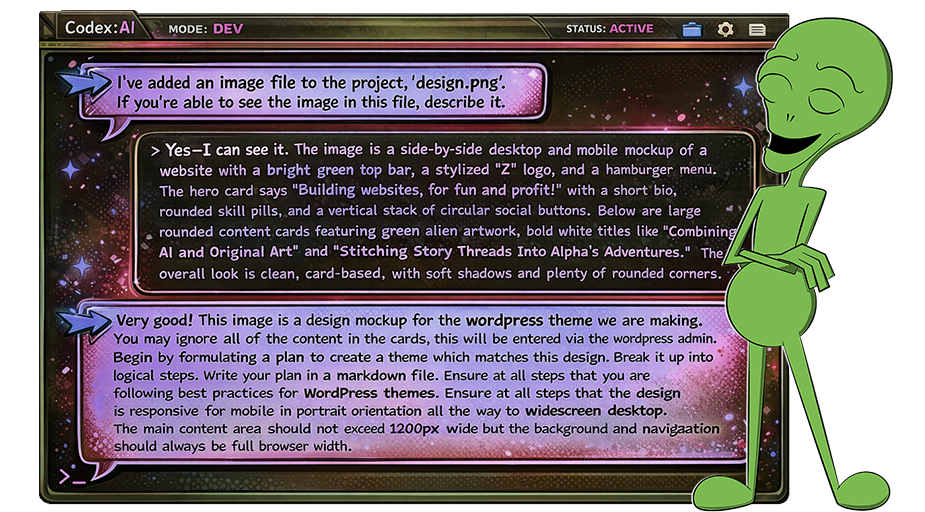
I started small and asked for basic WordPress theme scaffolding. Within seconds, the bare minimum was done. That alone saved hours, and curiosity pulled me further. I took a screenshot of a Figma layout I had been casually refining and dropped it into the project directory. When I asked Codex if it could “see” the image, it said yes! So I asked it to build the theme to match.
The first pass was not pretty, but it was solid. The HTML layout was right, and the problems were clearly visual. Before I even fully formed my next thought, Codex suggested refining the styling to better match the design. That moment of anticipating my next move hit hard. In minutes, I had something that would normally take days to reach.
Over the next four days, the project turned into a conversation. Tweak after tweak, refinement after refinement, I spent a few focused hours each day shaping the theme. By the end of a long weekend, a project I had mentally budgeted two months for was basically done. I remember laughing out loud early on, because I realized the limitations I had been working under no longer applied.
View the theme source on GitHub
Momentum and New Possibilities
Finishing the theme unlocked something subtle but powerful. Momentum. Ideas I usually dismissed as more work than they were worth suddenly felt approachable.
The WordPress theme revealed a thread I could not stop pulling. That one project led straight into a series of things I had been carrying around as half-ideas for years. A small tool to safely read and convert exports from my task list service. A custom elf-on-the-shelf style web game I built in December for my daughter. A real-time, voice-driven personal assistant that actually works the way my brain does. None of these are groundbreaking on their own. What mattered was that I finally started them.
These were projects I previously didn’t have the time for. Once that starting cost collapsed, they stopped feeling indulgent and started feeling inevitable.
That shift did not stay limited to personal projects. It quietly changed how I work professionally, too. AI now helps me break down pull request reviews, scaffold large sections of new code, write and refine documentation, and even generate thorough commit messages. Judgment and experience still matter. If anything, they matter more. But a lot of friction is simply gone. The same force that made a WordPress theme feel worth starting is now shaping how I work day to day.
In the end, the WordPress theme was not the point. It was proof. AI did not remove effort or replace judgment. It changed the economics of starting. When the cost of exploration drops low enough, entire categories of ideas come into reach. For me, that has mattered far more than raw speed. It has changed how I decide what is worth building in the first place.